
Why Texas Has No Separate Medical Hardship License
Texas does not issue a dedicated 'medical hardship license' as a distinct product. Medical-purpose driving — trips to dialysis, oncology appointments, transporting a dependent child to specialist care — falls under the state's Occupational Driver License (ODL) framework. You petition a district or county court, not DPS, and the court order must enumerate medical necessity as one of your essential needs alongside any employment or household duties.
The structural confusion starts when suspended drivers search for 'medical hardship license Texas' and find no matching program name in state statute. What exists is Texas Transportation Code §521.241, which authorizes courts to grant an ODL for 'essential need.' Medical transport qualifies as essential need, but the petition process, documentation burden, and approval standards are identical to employment-based ODL applications. There is no expedited medical track, no separate fee structure, no DPS administrative shortcut for urgent cases.
Compare car insurance rates in your state
Get quotes from licensed carriers — no obligation, no spam, results in minutes.
Get Your Free QuoteTexas ODL Reinstatement Base Fee
$125
This is the DPS reinstatement fee required before the court-issued ODL becomes effective. It does not include county court filing fees, which vary by jurisdiction and are not standardized statewide.
Texas Department of Public Safety Driver License Reinstatement Fee Schedule
What the Court Petition Must Prove for Medical Driving
The court will not grant an ODL simply because you need to drive to medical appointments. You must prove three elements: the medical treatment is essential and recurring, personal driving is the only practical means of transport, and alternative options (Uber, public transit, medical transport services, family members) are unavailable or unreasonable for your specific treatment schedule.
Physician documentation is the load-bearing requirement. The court expects a letter from your treating physician or treatment center on letterhead confirming your diagnosis, the frequency and duration of treatment (e.g., 'Patient requires hemodialysis three times weekly, sessions lasting four hours each, indefinitely'), and a statement that the patient's condition makes alternative transport impractical. The physician must explain why ride-sharing or medical transport does not work — post-treatment weakness, immunocompromised status requiring isolated transport, treatment-schedule unpredictability, or distance from the nearest alternative provider.
For dependent-care cases — driving a child to chemotherapy, transporting an elderly parent to cardiology appointments — you need the dependent's physician letter plus proof of relationship (birth certificate, guardianship papers, power of attorney) and documentation showing you are the primary or only available caregiver. Courts scrutinize whether another household member with a valid license could perform the transport instead.
Texas courts will deny medical-purpose ODL petitions when Uber or medical transport services are reasonably available in your county — the burden is on you to prove they are not.
Required Documentation for Medical ODL Petition
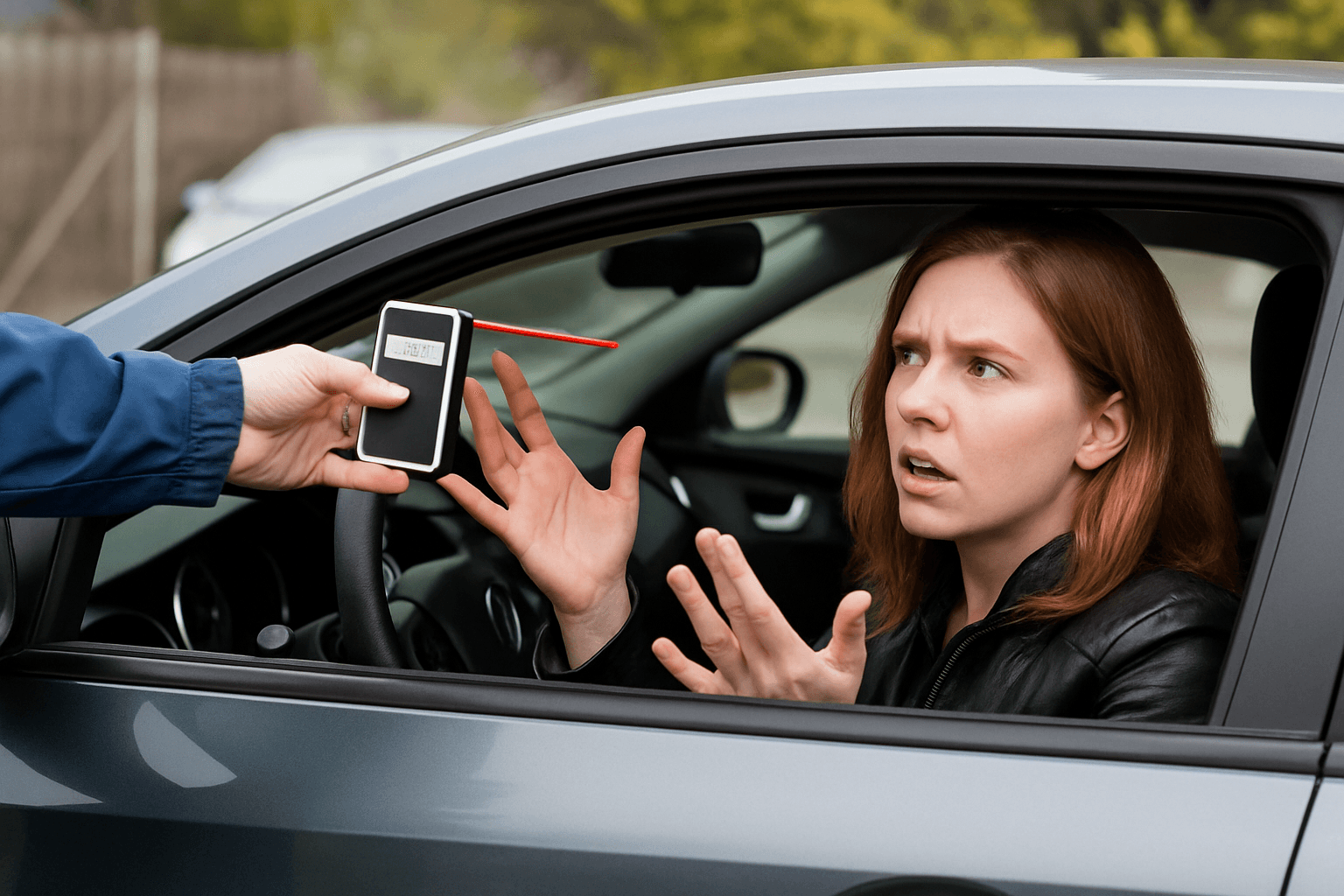
Petition to the court: The formal legal document requesting the ODL, stating your suspension trigger, essential needs (including medical), and proposed driving restrictions. Many counties have pro se templates available at the district clerk's office. SR-22 certificate of financial responsibility: Required for all ODL holders in Texas regardless of suspension cause. You cannot petition without filing SR-22 first, and the certificate must name the court and case number if known at filing time. Ignition interlock installation documentation: Mandatory if your suspension is alcohol-related or if the court orders it as a condition of approval.
Physician verification letter: Must be on provider letterhead, include patient name and date of birth, describe the medical condition requiring treatment, specify treatment frequency and duration, state the address of the treatment facility, and explicitly confirm that alternative transport options are impractical for this patient's condition. Proof of essential need routes: Employment records if work is also listed as essential need, school enrollment for education purposes, or household necessity documentation. Texas courts define 'essential household duties' narrowly — medical appointments for dependents qualify, general errands do not. Proof of residence and identity: Current Texas identification, utility bill, or lease agreement confirming county residence, which determines court jurisdiction.
Related Articles


How the Court-Petition Process Works in Texas
You file the ODL petition in the district or county court where you reside, not where the offense occurred or where your license was suspended. Court filing fees vary by county — Houston-area counties typically charge $200 to $300 — and are separate from the $125 DPS reinstatement fee. The court schedules a hearing, usually within 30 to 45 days of filing, where a judge reviews your petition and supporting documentation.
At the hearing, the judge has full discretion to grant, deny, or modify your request. The court order will specify your permitted driving purposes (work, medical, school, household duties), the geographic routes you may drive, and the time-of-day restrictions. Texas law caps ODL driving at 12 hours in any 24-hour period regardless of how many purposes the court approves. For medical cases, the court order typically enumerates the treatment facility address and restricts driving to the most direct route between your residence and that facility.
Once the court issues the order, you present it to DPS along with proof of SR-22 filing and payment of the $125 reinstatement fee. DPS then issues the physical ODL card. Processing at DPS typically takes 7 to 10 business days after the court order is received. The ODL is valid for the duration of your suspension period unless revoked for violation of the court order's terms.
Texas ODL Driving Cap
12 hours per day
Texas Transportation Code caps ODL driving at no more than 12 hours in any 24-hour period, regardless of how many essential needs the court approves. Violating this cap or driving outside permitted hours triggers automatic revocation.
Texas Transportation Code §521.246
What Happens If You Violate ODL Restrictions
Driving outside the permitted purposes, routes, or hours listed in the court order is a Class B misdemeanor in Texas, punishable by up to 180 days in jail and a fine up to $2,000. The ODL is automatically revoked upon arrest, and you face a new suspension period on top of the underlying suspension you were already serving. Courts treat ODL violations seriously because the license is a privilege granted despite demonstrated unsafe driving history.
For medical-purpose ODL holders, the most common violation is driving for purposes not enumerated in the court order. Stopping for groceries on the way home from dialysis, detouring to pick up prescriptions at a pharmacy not on the approved route, or driving a family member to an unrelated appointment all constitute violations. The court order is literal — any driving not explicitly permitted is prohibited.
SR-22 Filing and Insurance for Medical ODL
Every Texas ODL holder must maintain SR-22 financial responsibility certification for the duration of the restricted license period. The SR-22 is filed by your insurance carrier directly with DPS and confirms you carry at least the state minimum liability coverage: $30,000 per person, $60,000 per accident for bodily injury, and $25,000 for property damage. The filing fee typically ranges from $15 to $50 depending on carrier.
Finding a carrier willing to write SR-22 policies for suspended drivers requires shopping non-standard or high-risk insurers. National carriers writing SR-22 in Texas include Progressive, GEICO, and The General. Regional specialists like GAINSCO and Dairyland focus on high-risk cases and often approve policies other carriers decline. Monthly premiums for SR-22 liability-only policies range from $85 to $200 depending on your suspension trigger, age, and county. If your suspension stemmed from DWI, expect premiums at the higher end of that range and potential ignition interlock surcharges on top.
If you do not own a vehicle but still need to drive for medical appointments — borrowing a family member's car, for example — ask carriers about non-owner SR-22 policies. These cover liability when you drive a vehicle you do not own and typically cost $40 to $90 per month. The ODL court order does not require you to own the vehicle you drive, only that you maintain SR-22 filing and restrict driving to approved purposes.