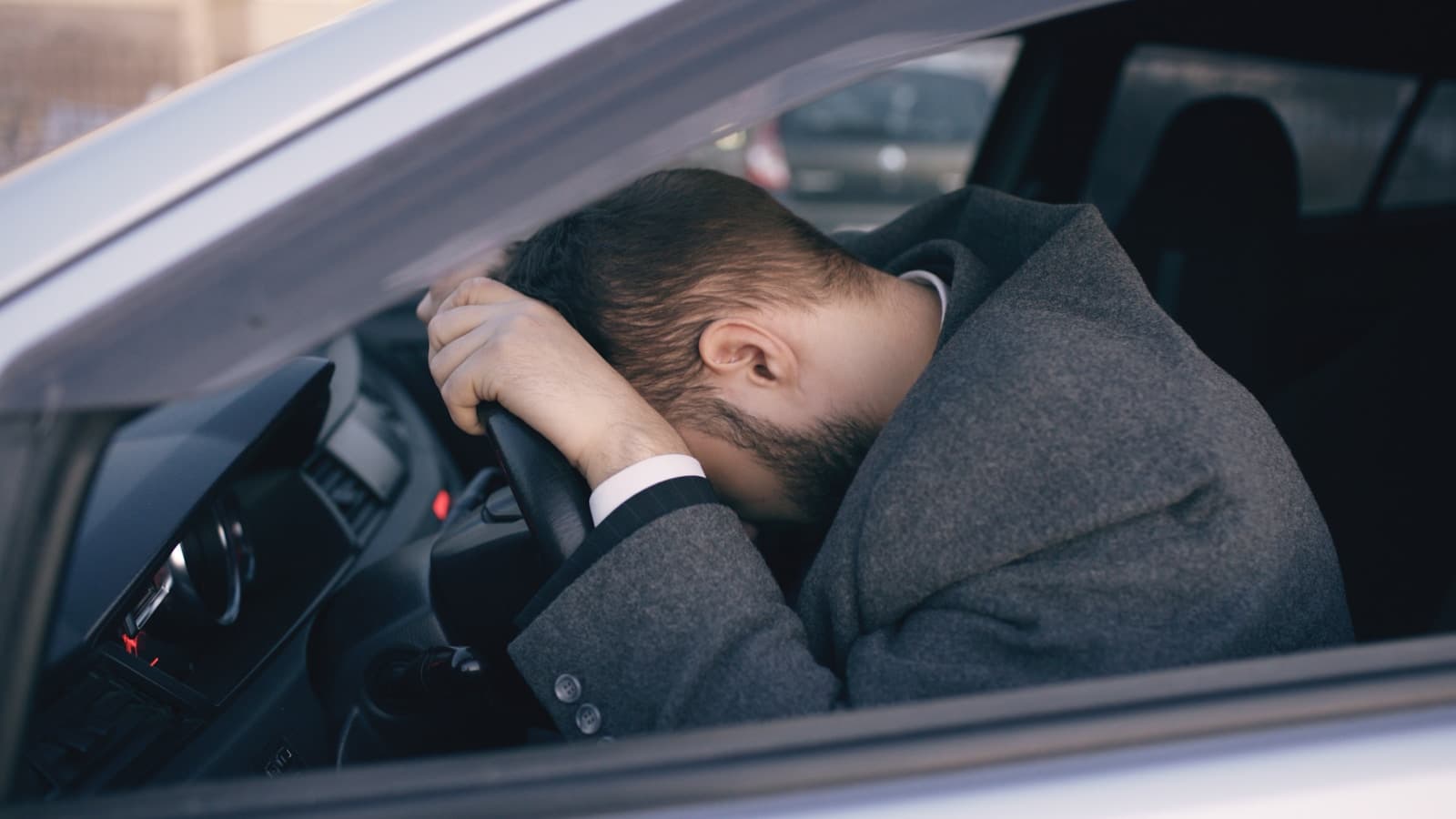
Your License Is Suspended and You Have a Medical Appointment You Cannot Miss
You need to drive yourself to dialysis three times a week, or you need to transport your elderly parent to oncology appointments, or your child requires twice-weekly physical therapy visits at a specialist clinic 40 miles away. Your Missouri driver's license is suspended. Uber costs $60 each way. The rural county you live in has no medical transport service. Missing treatment is not optional.
Missouri allows medical-purpose driving under its Limited Driving Privilege framework, but the application is not automatic and the process is stricter than most suspended drivers expect. The circuit court controls LDP eligibility, not the Department of Revenue. You petition the court in the county where you live, not where your offense occurred. The court requires physician documentation proving that personal driving is the only practical option for your treatment schedule — and many medical-hardship petitions are denied because applicants fail to document why Uber, family assistance, or public transit will not work.
Compare car insurance rates in your state
Get quotes from licensed carriers — no obligation, no spam, results in minutes.
Get Your Free QuoteMissouri Reinstatement Fee
$20
Missouri charges a $20 base reinstatement fee for most suspensions, though alcohol-related revocations carry a $45 fee. The LDP court petition itself has separate filing costs set by the circuit court clerk, typically $50–$100 depending on county.
Missouri Department of Revenue Driver License Bureau fee schedule
Missouri Folds Medical Driving Into the General LDP Framework
Missouri does not have a standalone medical hardship license product. Medical-purpose driving is permitted under the state's Limited Driving Privilege, which covers employment, school, medical appointments, alcohol/drug treatment, and other court-approved purposes. The court defines which purposes you may drive for when it grants the LDP. Medical purposes are added to the LDP alongside employment or school, or as the sole approved purpose if that is your only driving need.
The application path is always through the circuit court, even when your underlying suspension is administrative. If the Department of Revenue suspended your license for insurance lapse, unpaid tickets, or points accumulation, you still petition the circuit court for the LDP — you cannot apply directly through the DOR. This confuses many drivers who assume administrative suspensions have administrative solutions.
The circuit court has discretion to deny any LDP petition. Missouri law prohibits LDP for certain serious revocations, including lifetime revocations for repeat DWI offenders and certain vehicular homicide or assault convictions. For most first-offense DUI suspensions, points-accumulation suspensions, and insurance-lapse suspensions, the court has authority to grant LDP if you meet the documentation requirements.
You must petition the circuit court in the county where you reside — you cannot petition in a different county even if your offense occurred there or your medical treatment facility is located there.
What the Court Requires to Approve Medical-Purpose LDP

The physician's letter must state your diagnosis or the dependent's diagnosis, the frequency and location of required medical appointments, and why personal driving is the only practical means of transport. The court wants to see that Uber, family assistance, public transit, or county medical transport services are unavailable, unaffordable, or incompatible with your treatment schedule. If you live in rural Missouri and the nearest dialysis center is 45 miles away with no public transit, that case is straightforward. If you live in St. Louis County with functional Metro Transit routes and available rideshare, the court will ask why those options do not work — document the answer before you file.
For dependent-care medical driving, you also need proof of relationship. If you are driving your elderly parent to chemotherapy, the court may require a birth certificate or other documentation proving the family relationship. If you are driving a medically-fragile child, you need the child's medical records in addition to the physician's letter. Missouri courts treat dependent-care medical driving the same as self-driving for medical purposes — both are approved under the LDP framework — but the documentation burden is higher because you must prove both the medical need and your role as the necessary caregiver.
Related Articles


How the Court-Petition Process Works and How Long It Takes
You file the LDP petition with the circuit court clerk in your county of residence. The petition form is available from the clerk's office or from your attorney if you hire one. The filing fee varies by county but typically ranges from $50 to $100. You attach the physician's letter, proof of SR-22 insurance if your underlying suspension requires it, proof of employment or other qualifying need if you are requesting multiple approved purposes, and ignition interlock device installation verification if the court or DOR has required IID for your case.
The court schedules a hearing. Processing time is not standardized across Missouri counties — some circuits schedule hearings within two weeks, others take 30 to 45 days depending on docket load. If your medical need is urgent, you can request an expedited hearing, but the court is not required to grant it. At the hearing, the judge reviews your documentation and decides whether to grant the LDP, deny it, or grant it with specific restrictions. The judge sets the permitted purposes, the permitted routes, and the permitted hours. Medical-purpose LDPs are typically broader in route and time than employment-only LDPs because medical appointments do not follow a fixed 9-to-5 schedule.
If the judge grants the LDP, the court issues an order. You take the court order to the Department of Revenue Driver License Bureau to obtain the physical LDP card. The DOR does not issue the LDP itself — the court grants the privilege, and the DOR processes the card based on the court's order. You must have SR-22 insurance filed with the DOR before the DOR will issue the card if your underlying suspension requires SR-22. The DOR processing time for the physical card is typically one to three business days after you present the court order and proof of SR-22 compliance.
SR-22 Filing Period for DUI
3 years
Missouri requires SR-22 certificate of financial responsibility for two years following certain suspensions, including uninsured accidents and DWI convictions. SR-22 must be filed by an authorized insurer directly with the Missouri Department of Revenue, and the filing period runs from the date the DOR receives the certificate.
Missouri Department of Revenue SR-22 requirements
SR-22 Requirement Depends on What Triggered Your Suspension
Not every Missouri suspension requires SR-22 filing. If your suspension was triggered by a DUI conviction, an uninsured accident, or certain repeat violations, the state requires you to file SR-22 proof of financial responsibility with the Department of Revenue before you can obtain the LDP card. If your suspension was triggered by unpaid tickets, child support arrears, or a medical condition reported by a physician, SR-22 is not required.
For DUI-related suspensions, SR-22 is mandatory. The filing period is typically two years from the date the DOR receives the SR-22 certificate, though repeat offenders may face longer filing periods. The SR-22 filing requirement is separate from the LDP petition — the court grants the LDP, but the DOR will not issue the physical card until you prove SR-22 compliance. Carriers writing SR-22 in Missouri include State Farm, Geico, Progressive, Dairyland, Bristol West, The General, and GAINSCO. Expect premium increases of 40 to 80 percent after a DUI suspension. Typical monthly premiums for SR-22 coverage in Missouri range from $140 to $240 for drivers with a DUI on record.
Ignition interlock device installation is required as a condition of LDP for repeat DWI offenders and certain first-offense DWI cases under Missouri law. House Bill 2110, enacted in 2019, created an immediate LDP pathway for first-offense DWI drivers who install an ignition interlock device, bypassing some of the mandatory hard suspension wait period. If the court or the DOR has ordered IID installation, you must provide verification of installation before the DOR will issue the LDP card. IID vendors in Missouri include Smart Start, Intoxalock, and LifeSafer. Monthly IID costs typically range from $70 to $100 including installation and monitoring.
What Happens If You Violate the LDP Restrictions
The LDP is not a full license. It permits driving only for the purposes, routes, and hours the court specified in the order. Driving outside those restrictions is treated as driving while suspended, a criminal offense in Missouri. If you are pulled over driving to a grocery store when your LDP permits only medical appointments and employment, you face arrest, vehicle impoundment, and potential extension of your suspension period.
If you violate the LDP terms or are convicted of another moving violation while holding an LDP, the court has authority to revoke the LDP. The Department of Revenue can also suspend the LDP administratively if you fail to maintain SR-22 insurance, if your insurer cancels the policy and files an SR-26 cancellation notice with the DOR, or if you are convicted of another alcohol-related offense. Once the LDP is revoked, you must wait out the remainder of the original suspension period before you can apply for full license reinstatement. Many drivers lose their LDP within the first six months because they fail to understand how narrow the permitted-use window is.
Next Step: Gather Physician Documentation and File the Petition
Your next action is to contact your physician or treatment center and request a letter documenting your medical need. The letter must specify your diagnosis, the frequency and location of required appointments, and why personal driving is the only practical transport option. If you are seeking LDP for dependent-care medical driving, obtain the dependent's medical records and proof of relationship at the same time. Once you have the physician's letter, contact the circuit court clerk in your county of residence to obtain the LDP petition form and confirm the current filing fee.
If your underlying suspension requires SR-22 filing, contact carriers writing SR-22 in Missouri before you file the petition — you need proof of SR-22 compliance before the DOR will issue the LDP card, and waiting until after the court grants the LDP adds unnecessary delay. Compare quotes from State Farm, Geico, Progressive, Dairyland, and The General. Ask each carrier whether they require full coverage or will write liability-only SR-22 policies, and whether they offer non-owner SR-22 if you do not own a vehicle. For medical-hardship LDP applicants, the cost stack includes the court filing fee, SR-22 filing fee if applicable, IID installation and monitoring if required, and the premium increase that follows SR-22 filing. Budget accordingly before you file the petition.