
When Medical Need Meets License Suspension in Michigan
You lost your Michigan license thirty days ago — OWI conviction, points accumulation, unpaid tickets, or uninsured-driving suspension. Now you're facing three dialysis appointments every week, or your elderly parent needs transport to chemotherapy every Tuesday and Thursday, or your child requires biweekly specialist visits for a chronic condition. Missing these appointments isn't an inconvenience; it's a survival problem. Michigan's restricted license program does recognize medical-purposes driving as an approved use category, but the application pathway is not the same as employment cases, and the documentation threshold is substantially higher.
Michigan does not issue a separate 'medical hardship license' product. Medical-purposes driving falls within the state's general restricted license framework — the same program that covers work, school, and court-ordered treatment. The Secretary of State evaluates medical-purposes applications under the same statutory authority as employment cases, but the proof burden shifts. For employment, you prove you have a job and need to drive there. For medical purposes, you must prove the medical need exists, document the treatment schedule with precision, and — critically — demonstrate that alternative transport options are not reasonably available to you. Most applicants submit a physician's letter confirming the medical condition and treatment frequency, then receive a denial because they never addressed the alternative-transport question. That omission is the single most common blocker in Michigan medical-hardship cases.
Compare car insurance rates in your state
Get quotes from licensed carriers — no obligation, no spam, results in minutes.
Get Your Free QuoteMichigan Restricted License Application Fee
$45
Applies to all restricted license applications regardless of purpose category — medical, employment, school, or court-ordered treatment. Paid at time of application submission to the Secretary of State. Does not include SR-22 filing fees or ignition interlock costs where those apply.
Michigan Secretary of State fee schedule
Michigan's Restricted License Framework for Medical Driving
Michigan Compiled Laws 257.323 grants the Secretary of State authority to issue restricted driving privileges during periods of suspension or revocation when the applicant demonstrates a qualifying need. Medical appointments and treatment fall explicitly within the statute's permitted-purpose categories, alongside employment, school attendance, alcohol/drug treatment programs, and court-ordered obligations. The Secretary of State does not maintain a separate medical-hardship track — you apply for a restricted license and request medical purposes as one of the approved driving categories on your license.
The restricted license application requires documentation proving each requested purpose. For medical driving, that means a letter from your treating physician or the medical facility confirming: the diagnosis or condition requiring ongoing treatment, the specific treatment schedule (frequency and timing of appointments), the expected duration of treatment, and a statement that the treatment cannot be rescheduled or consolidated to accommodate reduced driving availability. The physician must also confirm that you are medically able to operate a vehicle safely — some conditions that require frequent treatment also impair driving ability, and the Secretary of State will deny if the medical documentation itself raises safety concerns.
Michigan draws a sharp procedural distinction between suspensions and revocations. If your license was suspended (finite period with automatic reinstatement eligibility), you apply for a restricted license directly to the Secretary of State during the suspension period. If your license was revoked (indefinite, typically for repeat OWI or habitual offender adjudication), you must first petition the Driver Assessment and Appeal Division for a hearing before any restricted license can be granted. Revocation cases are structurally more complex — the DAAD hearing evaluates whether you should regain any driving privileges at all, and medical need is one factor the hearing officer weighs, but it does not guarantee approval.
Michigan restricted license applications for medical purposes fail most often not because the medical need is unproven, but because the applicant never documented why Uber, public transit, or medical transport services cannot reasonably meet the need.
What the Secretary of State Actually Requires for Medical-Purpose Approval
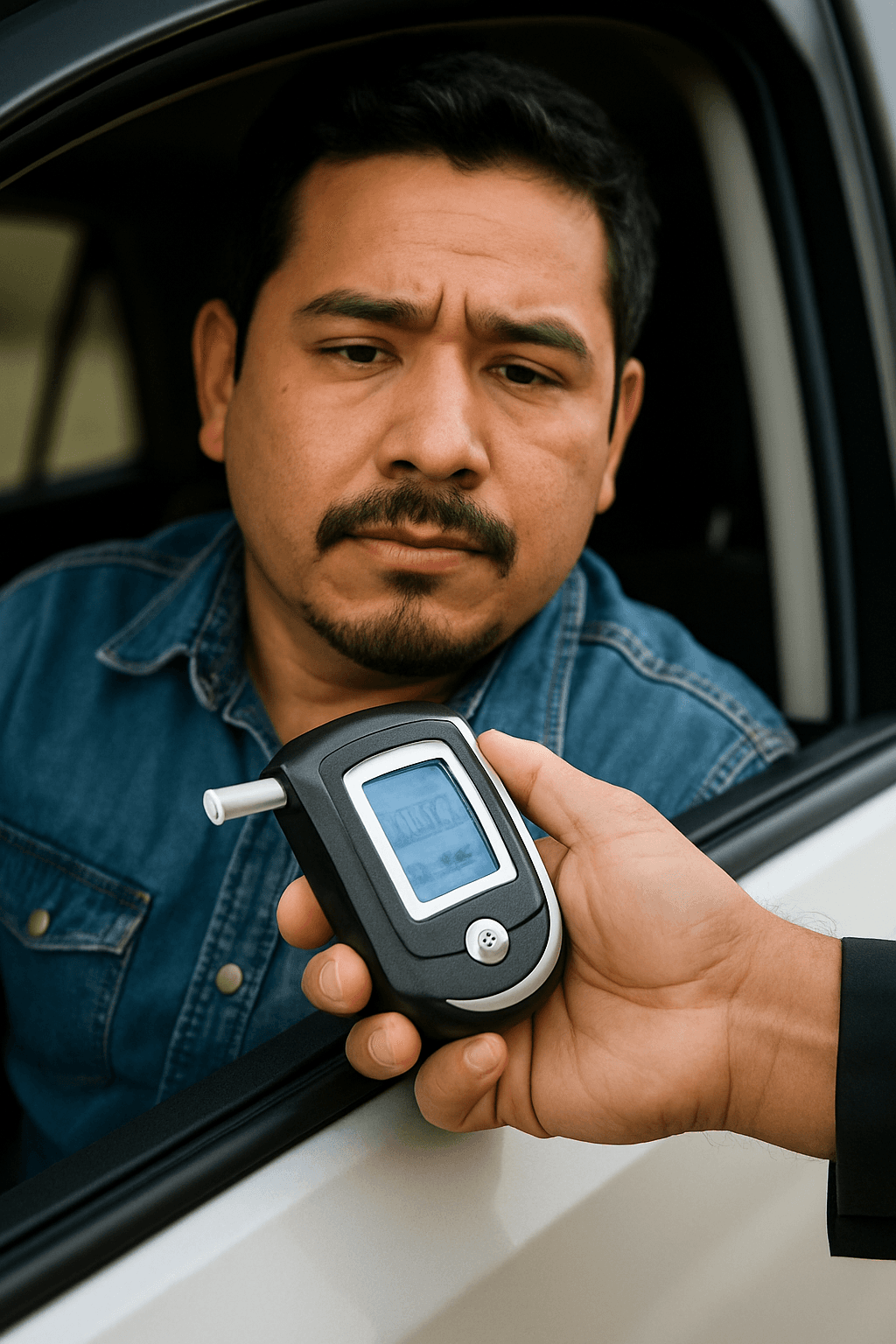
Your physician's letter must address treatment necessity and scheduling, but it must also include a specific statement addressing transport alternatives. The Secretary of State wants to see documentation that public transit is not available on your treatment schedule, that medical transport services (often provided free or low-cost by hospitals, dialysis centers, and cancer treatment facilities) are unavailable or insufficient for your treatment frequency, and that rideshare services like Uber or Lyft are not a practical solution given your medical condition, treatment schedule, or financial situation. If you live in Detroit, Lansing, Grand Rapids, or another urban area with active transit and rideshare availability, you must overcome a higher bar — the state assumes alternatives exist unless you prove otherwise. Rural applicants have an easier path because alternative transport infrastructure genuinely does not exist in most of Michigan's 83 counties.
For dependent-care medical driving — transporting a child, elderly parent, or spouse to their medical appointments — you need additional documentation beyond the physician's letter. Proof of relationship (birth certificate, marriage certificate, guardianship papers) is required. The dependent's treating physician must provide the same treatment-schedule documentation described above. You must also prove that you are the primary caregiver and that no other household member or family support system can reasonably provide the transport. Michigan does not publish a specific required form for this, but applicants who submit only the dependent's medical records without addressing the caregiver necessity question receive denials. The Secretary of State evaluates whether restoring your driving privileges is the least restrictive means of meeting the medical need — if another driver in the household has a valid license, or if the dependent qualifies for medical transport services, your application will likely fail.
Related Articles






Route and Time Restrictions Michigan Imposes
Michigan restricted licenses are purpose-specific and location-specific. Your license will explicitly list the approved purposes — medical appointments, employment, school, or court-ordered obligations — and will typically require you to carry documentation proving each trip falls within an approved category. For medical purposes, that means carrying a copy of your appointment confirmation, your physician's letter, or other proof that the trip is medically necessary. If you are stopped while driving outside an approved purpose, the restricted license does not protect you — you are treated as driving on a suspended license, which is a misdemeanor under Michigan law.
Time restrictions are imposed based on the treatment schedule documented in your physician's letter. If your dialysis appointments occur Monday, Wednesday, and Friday from 8 AM to noon, your restricted license will authorize driving during those windows, with additional time allowance for reasonable travel to and from the facility. You cannot use the medical-purposes authorization to run errands before or after the appointment unless those errands also fall within another approved purpose category on your license. Michigan does not impose uniform statewide time windows for medical driving — every restricted license is individualized based on the documentation submitted.
Route restrictions depend on the approval authority and the underlying suspension cause. For suspension cases, the Secretary of State typically does not enumerate specific roads or highways unless the applicant's violation history includes geographic restrictions imposed by a court. For revocation cases approved through the DAAD hearing process, the hearing officer may impose more granular route restrictions, particularly if the revocation stemmed from a location-specific violation pattern. Most medical-purposes restricted licenses do not include turn-by-turn route requirements, but they do require you to use the most direct reasonable route between your residence and the medical facility.
Michigan SR-22 Filing Duration
3 years
Required for OWI-triggered suspensions, uninsured-driving convictions, and certain other violations. Filing begins on reinstatement date, not conviction date. Lapse during the 3-year period triggers automatic re-suspension and restarts the clock.
Michigan Compiled Laws 257.509
SR-22 and Ignition Interlock Requirements for Medical-Hardship Restricted Licenses
Whether you need SR-22 insurance depends on what triggered your suspension, not on the fact that you are applying for medical-purposes driving. OWI convictions, uninsured-driving violations, and certain at-fault accidents triggering financial responsibility requirements all mandate SR-22 filing. Medical-purposes restricted license applicants in those categories must obtain SR-22 coverage before the Secretary of State will approve the restricted license — proof of SR-22 filing is a prerequisite to approval, not something you handle after the fact.
For OWI-triggered suspensions, Michigan law requires installation of a Breath Alcohol Ignition Interlock Device — the state uses the specific term BAIID, not generic ignition interlock. First-offense OWI results in a 30-day hard suspension, then eligibility for a restricted license with BAIID for the remaining 150 days of the suspension period. Your restricted license will not be approved without proof of BAIID installation from a state-approved vendor, and the device must remain installed and functioning for the full restricted-license period. BAIID violations — failed breath tests, missed rolling retests, tampering — are automatically reported to the Secretary of State and can result in immediate revocation of your restricted license. For medical-purposes applicants, this means your vehicle must have the device installed even if you are only driving to dialysis three times a week. There are no medical-condition exemptions to the BAIID requirement for OWI cases.
If your underlying suspension is not OWI-related — points accumulation, unpaid tickets, or failure-to-maintain-insurance — BAIID is not required, but you still need standard liability coverage meeting Michigan's no-fault minimum requirements. Michigan's no-fault framework is uniquely complex. You must carry $50,000 bodily injury per person, $100,000 per accident, $10,000 property damage, and Personal Injury Protection coverage at one of the state's tiered PIP levels. Post-2020 reform, drivers with qualifying health coverage can opt out of unlimited PIP, but reinstating after a suspension requires proving you have compliant coverage filed with the Secretary of State. For SR-22 cases, your insurer files the SR-22 certificate directly with the state — you do not handle the filing yourself.
Application Timeline and What Happens After Approval
Michigan does not publish a guaranteed processing timeline for restricted license applications. Suspension-case applications submitted with complete documentation typically process within 2-4 weeks, but the Secretary of State makes no commitment. Incomplete applications — missing physician documentation, no alternative-transport statement, missing SR-22 proof where required — are returned without processing, and the clock starts over when you resubmit. Revocation cases requiring DAAD hearings take substantially longer because you must first schedule a hearing, attend, and receive the hearing officer's decision before any restricted license is issued. DAAD hearing backlogs in Michigan can run 60-90 days from petition to hearing date.
Once approved, your restricted license functions as a regular Michigan driver's license for the approved purposes only. You must carry the restricted license document with you at all times while driving, along with proof that your current trip falls within an approved category. For medical purposes, that means appointment confirmations, physician letters, or other documentation. Violating the restrictions — driving outside approved purposes, driving outside approved time windows, failing a BAIID test — results in immediate revocation of the restricted license and potential criminal charges for driving on a suspended license. Michigan treats restricted-license violations seriously because the privilege was conditioned on compliance.
The restricted license does not shorten your underlying suspension period. If you were suspended for one year, the restricted license allows limited driving during that year, but the full suspension term still runs. At the end of the suspension period, you must complete full reinstatement — pay the $125 reinstatement fee, provide proof of insurance, and if SR-22 was required, maintain that filing for the full three-year period measured from reinstatement, not from the original conviction date. Missing the SR-22 renewal during those three years triggers automatic re-suspension and restarts the SR-22 clock.
Compare SR-22 Carriers and Start the Restricted License Path
The medical need driving your restricted license application is urgent, but the application itself will not move forward until you solve the insurance piece. If your suspension trigger requires SR-22 filing, you need coverage in place before the Secretary of State will approve your restricted license. Not all carriers write SR-22 policies in Michigan, and not all carriers that do will write coverage for drivers with OWI convictions, multiple violations, or suspended-license histories. Geico, Progressive, and Bristol West write SR-22 coverage in Michigan for suspended drivers and will file the certificate directly with the Secretary of State. Compare quotes from carriers writing your specific violation profile, confirm the SR-22 filing fee and monthly premium, and initiate coverage before you submit your restricted license application. If BAIID is required for your case, confirm with the carrier that they will write coverage on a vehicle equipped with an interlock device — some carriers exclude interlock-equipped vehicles from standard policies.